Axoly Tech

Stabilizing a critical stack for field teams

Case study: how Axoly Tech put an end to outages at an agricultural logistics company through proactive monitoring and a team empowerment approach.

Before / After

From daily firefighting…

  • Critical, unexpected problems with in-house tools
  • Development team forced to react under pressure
  • No time to make improvements or work at a strategic level

…to complete control.

  • Effective, continuous monitoring in place
  • 90% reduction in downtime
  • Development team autonomous and focused on improvements to make

Client context

Our client is a small company operating in the agricultural logistics sector in Latin America. With staff working in the field, the team needs to be certain that its digital tools are available at all times. Even a small disruption can mean they are unable to carry out their fieldwork.

The challenge

The company was facing critical, unexpected problems with its in-house tools, leading to crashes related to their applications. These disruptions left field workers without access to their essential tools, resulting in a loss of time and resources. On top of that, the development team was forced to react day to day, instead of focusing on proactive improvements.

Axoly Tech's role

We were tasked with developing a long-term solution to address these challenges. Through an initial audit and discussions with the development team, we discovered that the problem was not related to software quality, but rather to a lack of effective monitoring: critical server constraints were not being detected in time.

Solutions implemented

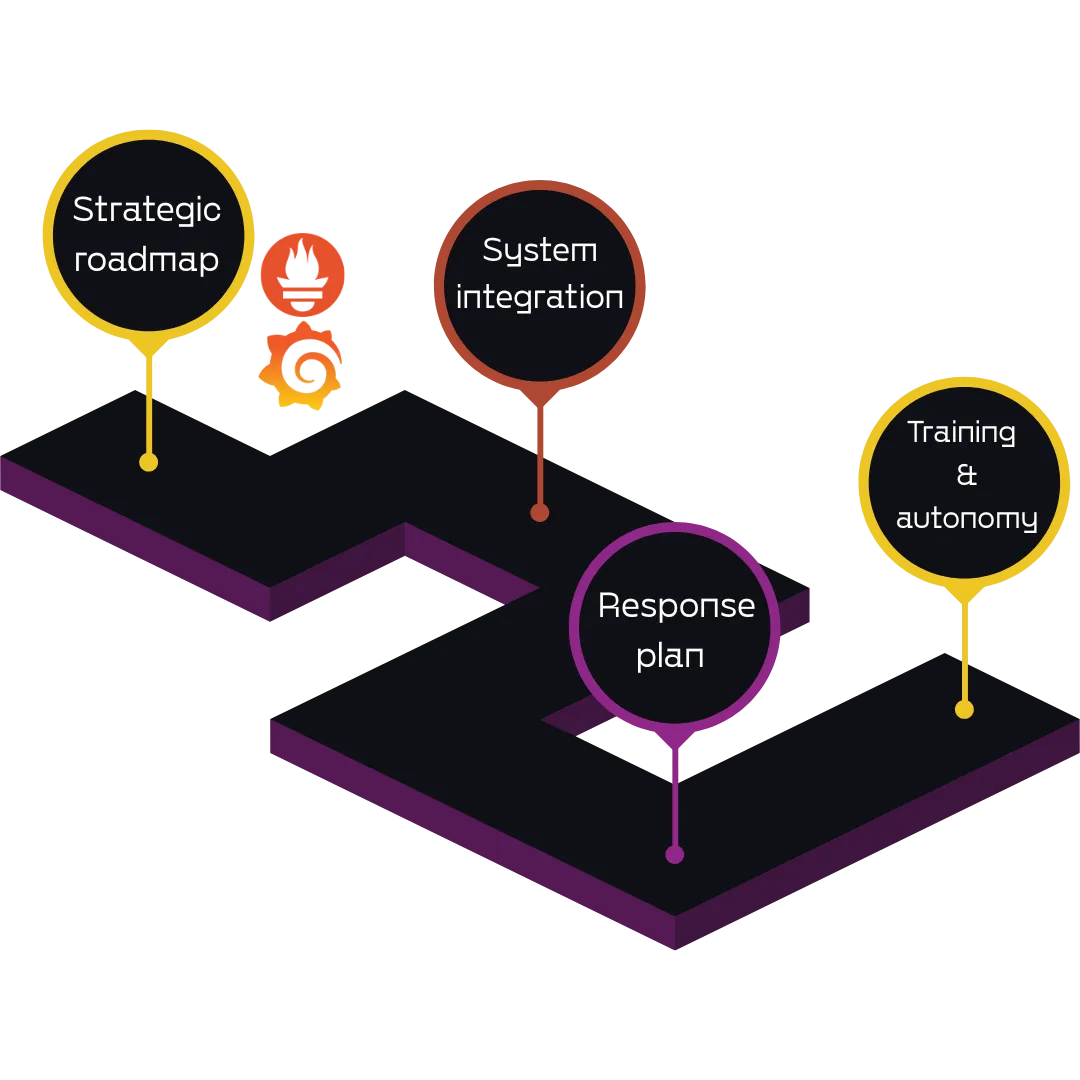
  • A strategic roadmap

    We developed a detailed roadmap for implementing monitoring and preventive alerting solutions using Grafana, Prometheus, and custom exporters.

  • A system integration

    We handled the integration of the monitoring system with their existing tools.

  • A response plan

    We established a clear response plan for alert management, to avoid any confusion and define responsibilities within the team.

  • Training for the team

    Training that will allow them to develop monitoring tools autonomously in the future.

Illustration of the stabilization journey: strategic roadmap, system integration, response plan, then training and autonomy.

Our work resulted in

A 90% reduction in downtime

Thanks to proactive monitoring and alerting systems, we eliminated downtime caused by unforeseen events, improving operational efficiency and reliability.

Team autonomy

The development team is now able to monitor its own solutions. This reduces their dependence on external support and improves their ability to manage and maintain their systems independently.

The importance of autonomy

Developing resilient and observable digital tools and services is essential to ensuring their long-term maintenance, especially for SMEs with limited resources.

An unforeseen crash can paralyze operations and jeopardize future developments. Building robust safety nets and prevention strategies is therefore essential for business continuity and growth.

This project is part of our mission to empower SMEs, allowing them to focus on their goals and their impact, without being slowed down by technical problems.

Your project has a history. Let's build what comes next, together.

A first 30-minute conversation, with no commitment, to see whether we can help.